



How a Trusting Parent-Teacher Partnership Helps Your Child

One of the many reasons back-to-school season is my favorite is that I get to provide professional development training to teachers as they return to school. The fresh optimism of a new school year is always palpable. I know teachers sitting in my trainings are being pulled away from nesting in their classrooms, so it’s important to me that I value their time with highly-effective information they can use as soon as they meet their students.
I recognize that every teacher I meet has said “Yes” to showing up for our kids. They want to be here and they want the best for our children. But there are stressors that end up making the job unsustainable for some. All the data collection, meetings, and testing standards on top of the actual teaching can be overwhelming. Yet, when I consult with teachers, they often report their highest level of stress doesn’t come from the data, testing, or students, but from parents.
And yes, as a child psychologist I also hear stories from parents about how teachers and administrators need more information on supporting our neurodivergent students, which I talk about here, here, and here. Today, I’m going to address how parents can show up for teachers so they can best help our kids.
The Importance of Communication
Many concerns from parents stem from a lack of communication. I encourage parents every day to embrace the mindset of “no news is good news” because teachers have a lot of responsibilities outside of classroom time and unless there is a significant concern to share, no news really is good news. And, a teacher who has time to share a positive anecdote with you is often a sign that they not only understand the value of this win for your child, but they are likely supported enough by their school administration to have time to tell you about it.
While communication is paramount in helping parents and educators work together to support a child, the most important factor in establishing and maintaining these relationships is trust. Without trust, simple every-day interactions can go one of two ways: If parents don’t hear from a teacher they trust, they may think, “No news is good news! She will let me know if there is a concern.” In other words, they trust her judgment to be their child’s person throughout the school day. If they don’t hear from a teacher they don’t trust, they may think, “I’m frustrated he is not communicating with me. How will I know how things are going at school?
I have worked hard over the years to establish trusting relationships with my own children’s teachers, which has led to partnerships beyond what I could have imagined. I’ve also asked several public educators I trust to share their perspectives. Perhaps something here can help you foster a partnership with your child’s teacher or speak to you as an educator about building stronger connections with parents.
My Perspective as a Parent
I have never been a teacher. I do not know what it feels like to make connections with 20-30 children at once, plan a lesson that is only appropriate for a few and must be differentiated for others, and meet the expectations of the principal, the school district, and multiple Individual Education Plans and 504 Plans all at the same time. It is the hardest and most important job out there because nurturing young learners is the foundation for the future of our communities.
I have worked in public schools as a school psychologist and I have been in countless classrooms observing students and their interactions with their teachers. Call me your “fly on the wall.” But, when my own kids started school and I couldn’t be “the fly on the wall” in their classrooms, I had to learn how to build relationships from the outside in.
One of my first interactions with my son’s preschool teacher was when they shared their developmental concerns for him. Again, a parent’s reaction here goes one of two ways: If you trust this teacher, you believe her and you work together figuring out how to best support your child. However, if you don’t trust this teacher, you question her, rationalize why she might be wrong, and your child might not get the support they need (at least not as fast as they would in the first scenario).
Now, many years later, I believe my partnership with my children’s teachers has been a key factor in their success. I want parents and teachers to know that this trusting relationship is possible. Here’s how:
Parents: Get Involved!
In order for parents to trust teachers and school staff, we must first know them. If your only interaction with teachers is when something is wrong, this will not build a trusting partnership.
So, how can you show up? You could give your time, money, or donated supplies, but show that you are in support of the job teachers are doing for all students. I’m of the mindset that for every parent who volunteers, there are five or so more parents who cannot volunteer due to working multiple jobs or having young children at home. So be present, not only for your child, but for their classmates as well. Be a classroom helper, be a field trip chaperone, organize books in the school library, and join the PTA. Some of my strongest relationships with teachers and administrators were built through interactions I’ve had during PTA meetings and events.
When you present yourself as helpful and collaborative in one school setting, teachers understand that you will be helpful and collaborative in parent-teacher conferences and IEP meetings, too. They will be appreciative of your time and this builds trust. You will also see them in action with your child and this will build your trust in them.
Teachers & Parents: Communicate (with boundaries!)
Don’t let the only time for communication be in the carpool line. No one can build a trusting relationship there. Establish the best way to contact each other and stick to it. Try not to communicate when you are anxious or angry. Use the tried and true method of “write it, but don’t send it.” Sleep on it and have your partner or colleague look it over. Parents, if you wouldn’t say it to a co-worker, don’t say it to a teacher. It’s a collaborative partnership and the project is your child. So, don’t let your emotions hijack the project.
“When a parent comes across as accusatory when you express a concern or share data, it makes me more hesitant to reach out.” – Special Education Teacher
Parents, I know you feel you want to protect your child when you don’t think they are getting what they need, but have you ever wanted to collaborate with someone who is angry with you? If teachers are walking on eggshells around you due to a previous interaction, they may not share as much information with you as you would get in a trusting relationship. When teachers can predict that you’ll be collaborative, they will look forward to sharing information with you, which will equate to solving problems faster and more effectively for your child. One day soon students will advocate for themselves but we are their role model. They are watching how we interact with each other, so how we build relationships matters. If working collaboratively with teachers is difficult for you due to your own past experiences, seek support for yourself so that you can show up for your child.
Teachers, know that some parents are triggered by interactions with educators because they are reminded about negative experiences from their own schooling. Help parents refocus to collaboratively problem-solve this task: What does this child need? They need for us to be open and available to communicate with each other. They also need us to advocate for them if something isn’t in their best interest.
“Parents are parenting to the extent they know how to. When everyone knows more, we all do better and are more effective. Parents, keep sending your child to school on time and support academic and behavior growth. Let's grow as a community to be more effective.” – Special Education Teacher
Parents: The More Information the Better
This is a big one. In my work with neurodivergent children, parents are often scared that their child will be wrongly labeled or judged based on a previous evaluation report or the opinion of a previous teacher. In my experience, more information is best and without it, teachers may not understand your child as well as they could.
“It truly takes a team and when parents and teachers are on the same page and work together, that creates much more success! I would say it is helpful when parents share information in the beginning of the year about their child. Parents know their kids best and when I can come in with some awareness around what the student likes, what his/her strengths are, and what some of the challenges are, it can help me get off to a good start.” – Special Education Teacher
“I believe parents first trust us by sending their students to us, believing that we will do all we can to help students grow throughout the year. It is always helpful for parents to share information that they feel might impact their child while learning in school. That ranges from expecting a new baby, a relative moving in, a change in job, change in family dynamics, inconsistent bed time routines etc.” – Assistant Principal
So, start off the school year with an email to all teachers about getting to know your child. You are the expert! Tell them what works, what doesn’t work, what to look for, and position yourself as a supportive and available partner in this journey.
Educators: It’s All About the Administration
At the end of the day, in my opinion, the cornerstone of a trusting relationship between parents and teachers is modeled first by the principal and assistant principal. The principal sets the tone of the school and is a role model for teachers. Like any job, when staff feel supported, they want to give their best. Schools earn reputations for having great teachers and for being a great place to work, just like any other company. High test scores and nice facilities are important to many people, but I truly believe that good schools are created by excellent educators. It’s the people and the relationships that make the difference.
“I work really hard to establish trusting relationships. In my role, those relationships only get stronger from year to year. I think the parent-teacher trust is more difficult to build because of the yearly changes…some turnover is good and I wish that was reflected. We always encourage our staff to pursue positions that speak to them or will help them continue to grow.”
– Assistant Principal
When teachers work in an environment where they are encouraged to grow and trust each other, collaboration is fostered not only with other teachers, but with parents and students.
Parents: What If Trust is Broken?
So, what if you don’t trust a teacher? First, ask yourself why not? Have you had a negative interaction? Is their temperament not a good fit for your child? Once you have had enough interactions to be sure whether or not you trust a teacher’s skills and judgment, what if you don’t?
Most concerns can be solved by holding a parent-teacher conference. However, if you are not feeling heard, it’s time to talk to school administration. Perhaps the teacher needs support from the principal to explain why the school can’t provide what you are asking for, perhaps the teacher needs more training, or maybe there is a pattern in the classroom you think the principal should know about.
So many parents I work with say, “I don’t want to go over the teacher’s head” or “I’m scared to talk to the principal.” In my experience, talk with the teacher first, but if you think a teacher needs more support, principals want to know about it. If you have a concern about a teacher, it’s the principal who knows all that might be at play in the situation, even if they can’t tell you every detail. Be a collaborative partner who is open to hearing and giving feedback so that problems can be solved and progress can be made. However, remember that all concerns are relative. A concern for you may not be a concern for the another family. Principals are in the business of triaging concerns, so be patient.
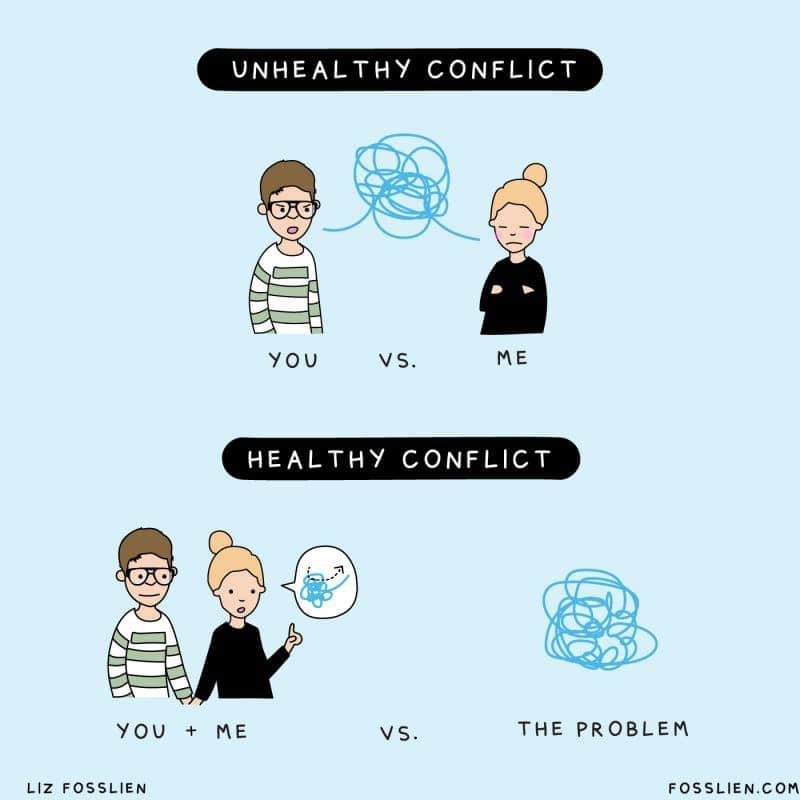
Like any collaborative relationship, there will be problems to solve and, at times, there will be conflict. We can weather the conflict and build a path to success if the foundation is built on a trusting partnership.
Let’s Stay Connected!
~Dr. Emily
I’m Dr. Emily, child psychologist and former school psychologist, and I’m on a mission to help parents and teachers be the best adults we can be for the neurodivergent kids and teens in our lives. This isn’t about changing the kids, it’s about changing us. Learn more with my resources for parents, teachers, and schools at www.learnwithdremily.com.
**All content provided is protected under applicable copyright, patent, trademark, and other proprietary rights. All content is provided for informational and education purposes only. No content is intended to be a substitute for professional medical or psychological diagnosis, advice or treatment. Information provided does not create an agreement for service between Dr. Emily W. King and the recipient. Consult your physician regarding the applicability of any opinions or recommendations with respect to you or your child's symptoms or medical condition. Children or adults who show signs of dangerous behavior toward themselves and/or others, should be placed immediately under the care of a qualified professional.**